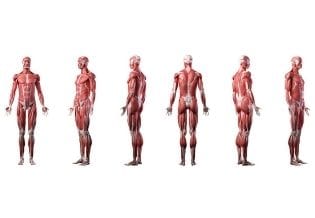
Submit Your Skeletal Muscle Pathophysiology Research
Join leading researchers advancing our understanding of muscle disease mechanisms, molecular pathways, and therapeutic targets through rigorous peer review and open access publication
Specialized Focus on Skeletal Muscle Pathophysiology
Our journal is dedicated to advancing the understanding of skeletal muscle disease mechanisms at the molecular, cellular, and systemic levels. We publish research that elucidates pathogenic pathways, identifies novel biomarkers, and explores therapeutic targets for muscle disorders including muscular dystrophies, inflammatory myopathies, metabolic myopathies, and age-related muscle dysfunction.
Two Convenient Submission Methods
Choose the submission pathway that best fits your workflow. Both methods provide secure, efficient manuscript handling with full tracking capabilities and expert editorial support throughout the review process.
ManuscriptZone Portal
Our comprehensive submission platform designed for complete manuscript management from submission through publication. Ideal for researchers who value detailed tracking and direct communication with editors and reviewers.
- Auto-save functionality prevents data loss
- Guided step-by-step submission workflow
- Real-time status tracking and notifications
- Direct access to reviewer comments and editor decisions
- Secure document management and version control
- Integrated revision submission system
Quick Submission Form
Streamlined submission process for straightforward manuscripts. Perfect for researchers seeking a fast, simple submission experience without account creation requirements.
- No account registration required
- Single-page submission interface
- Rapid manuscript upload and processing
- Email confirmation and tracking updates
- Suitable for all manuscript types
- Same rigorous peer review process
Article Types for Skeletal Muscle Research
We welcome diverse research contributions that advance understanding of skeletal muscle pathophysiology. Each manuscript type undergoes rigorous peer review by experts in muscle biology, disease mechanisms, and molecular pathology to ensure the highest scientific standards.
Original Research Articles
Comprehensive studies investigating molecular mechanisms of muscle disease, signaling pathway dysregulation, disease progression, or novel pathogenic mechanisms in skeletal muscle disorders.
Disease Mechanism Studies
Focused investigations of specific pathophysiological processes in muscle disease, including protein aggregation, mitochondrial dysfunction, inflammatory cascades, or metabolic disruption.
Biomarker Discovery
Studies identifying and validating novel molecular biomarkers for muscle disease diagnosis, prognosis, or monitoring disease progression using genomic, proteomic, or metabolomic approaches.
Disease Model Development
Reports on novel cellular, animal, or computational models of skeletal muscle disease that recapitulate key pathophysiological features and enable mechanistic investigation or therapeutic testing.
Systematic Reviews & Meta-Analyses
Comprehensive syntheses of existing research on muscle disease mechanisms, pathogenic pathways, or molecular targets, following PRISMA guidelines for systematic review methodology.
Methods & Protocols
Detailed descriptions of novel experimental techniques, analytical methods, or protocols for investigating muscle pathophysiology, including molecular assays, imaging techniques, or functional assessments.
Short Communications
Concise reports of preliminary findings, novel observations, or significant technical advances in muscle disease research that warrant rapid dissemination to the research community.
Perspective & Commentary
Expert viewpoints on emerging concepts in muscle pathophysiology, controversial findings, or future research directions in understanding skeletal muscle disease mechanisms.
Pre-Submission Checklist
Ensure your manuscript is complete and properly formatted before submission to expedite the review process. Our editorial team screens all submissions for completeness and adherence to guidelines before assigning to expert reviewers in skeletal muscle pathophysiology.
Complete manuscript in Word (.doc/.docx) or LaTeX format with all sections properly structured and formatted
High-resolution figures (TIFF/EPS, 300 DPI minimum) and tables with descriptive captions, properly referenced in text
IRB/IACUC approval documentation for human or animal studies, including approval numbers and institutional details
All authors have reviewed and approved the manuscript, with clear contribution statements for each author
Complete disclosure of financial relationships, potential conflicts of interest, and funding sources
All citations properly formatted according to journal style, with complete bibliographic information
Peer Review Timeline
We are committed to providing timely, constructive feedback from expert reviewers in skeletal muscle pathophysiology. Our streamlined editorial process ensures rapid decisions while maintaining rigorous scientific standards.
Manuscript Submission
Submit your manuscript through ManuscriptZone or Quick Submission Form. You will receive immediate confirmation and a unique manuscript tracking number.
Editorial Screening
Our editorial team conducts initial screening for scope, completeness, and quality. Manuscripts are checked for plagiarism using iThenticate software and assessed for fit with journal focus on skeletal muscle pathophysiology.
Editor Assignment & Reviewer Invitation
An editor with expertise in your specific area of muscle disease research is assigned. The editor selects qualified peer reviewers based on their expertise in relevant molecular mechanisms, disease models, or methodologies.
Peer Review Process
Expert reviewers evaluate your manuscript for scientific rigor, methodological soundness, novelty of findings, and contribution to understanding muscle disease mechanisms. Reviewers provide detailed feedback and recommendations.
Editorial Decision
The editor evaluates reviewer reports and makes a decision: Accept, Minor Revisions, Major Revisions, or Reject. You receive detailed feedback and specific guidance for any required revisions.
Revision Submission
If revisions are requested, you submit a revised manuscript with point-by-point responses to reviewer comments. The editor or reviewers assess whether concerns have been adequately addressed.
Re-review & Final Decision
Revised manuscripts undergo expedited review to verify that all concerns have been addressed. Final acceptance decisions are typically made within 14-21 days of revision submission.
Production & Publication
Accepted manuscripts enter production for copyediting, typesetting, and final formatting. Your article is published online with a DOI and immediately accessible to the global research community.
Total Timeline: Approximately 60 days from submission to publication
Why Researchers Choose Our Journal
We provide a trusted platform for disseminating high-quality research in skeletal muscle pathophysiology, backed by rigorous peer review, ethical publishing practices, and global visibility.
Expert Peer Review
Manuscripts reviewed by leading researchers in muscle disease mechanisms, molecular pathology, and disease modeling
Comprehensive Indexing
Your research gains worldwide visibility through indexing in Google Scholar, connecting it with the global scientific community.
Rapid Publication
Average time to first decision: 21 days. Complete publication process in approximately 60 days from submission
Open Access Impact
Immediate worldwide accessibility ensures your research reaches the broadest possible audience of muscle disease researchers
Ethical Standards
Committed to COPE publication ethics, transparent peer review, and rigorous standards. We handle misconduct allegations seriously and fairly.
Financial Support
APC waivers and discounts available for eligible authors from developing countries and unfunded research
Manuscript Requirements & Guidelines
Formatting Standards
Manuscripts should be prepared in Microsoft Word (.doc/.docx) or LaTeX format with double-spacing, 12-point font, and numbered lines. Include page numbers on all pages. Structure your manuscript with clear sections: Abstract, Introduction, Methods, Results, Discussion, Conclusions, and References.
Abstract Requirements
Provide a structured abstract (250-300 words) including Background, Methods, Results, and Conclusions. The abstract should clearly state the research question, experimental approach, key findings, and significance for understanding skeletal muscle disease mechanisms.
Methods Section
Describe experimental procedures in sufficient detail to allow replication. Include information on disease models used, molecular techniques, statistical analyses, and ethical approvals. For animal studies, follow ARRIVE guidelines. For human studies, confirm IRB approval and informed consent procedures.
Data Availability
We encourage deposition of raw data, molecular datasets, and analytical code in appropriate public repositories (e.g., GEO, ProteomeXchange, GitHub). Include data availability statements and accession numbers in your manuscript.
Figure & Table Guidelines
Submit high-resolution figures (minimum 300 DPI) in TIFF or EPS format. Provide editable source files for graphs and diagrams. Each figure and table should have a descriptive caption that allows independent interpretation. Label all axes, include scale bars for microscopy images, and define all abbreviations.
Reference Style
Use Vancouver style for references with sequential numbering in order of appearance. Include all authors for references with six or fewer authors; for seven or more authors, list the first six followed by "et al." Verify all references for accuracy and completeness.
Editorial Policies & Standards
Originality & Plagiarism
All submitted manuscripts must represent original work that has not been published elsewhere and is not under consideration by another journal. We screen all submissions using iThenticate plagiarism detection software. Manuscripts with similarity indices exceeding 30% will be returned for revision before peer review.
Authorship Criteria
All listed authors must meet ICMJE authorship criteria: substantial contributions to conception/design or data acquisition/analysis, drafting or critical revision of manuscript, final approval of the version to be published, and agreement to be accountable for all aspects of the work. Contributors who do not meet these criteria should be acknowledged rather than listed as authors.
Competing Interests
Authors must disclose all financial and non-financial competing interests that could be perceived to influence the research or its interpretation. This includes funding sources, employment relationships, consultancies, stock ownership, honoraria, patents, and personal relationships with individuals or organizations with financial interest in the subject matter.
Research Ethics
All research involving human subjects must have been conducted in accordance with the Declaration of Helsinki and approved by an appropriate institutional review board. Animal research must comply with institutional and national guidelines, with IACUC approval documentation. Include ethics approval numbers and institutional details in the Methods section.
Data Integrity
We are committed to maintaining the integrity of the published record. Image manipulation beyond linear adjustments is not permitted. Any concerns about data integrity in submitted or published manuscripts will be investigated according to COPE guidelines.
Need Assistance with Your Submission?
Our editorial team is here to support you throughout the submission and review process. Whether you have questions about manuscript preparation, submission procedures, or journal scope, we're ready to help.
Contact our support team: info@openaccesspub.org