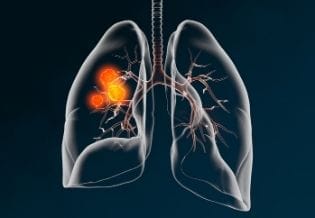
Call for Papers
Journal of Lung Cancer Epidemiology (JLCE) invites submissions that advance population science, screening effectiveness, and prevention strategies.
We welcome studies that clarify risk factors, improve early detection, and inform public health policy across diverse populations.
Focus areas for upcoming issues
Incidence and mortality trends
Regional and global patterns with clear methodological rigor.
Tobacco and nicotine exposure
Cessation, secondhand smoke, and emerging product impacts.
Screening effectiveness
Low dose CT implementation, uptake, and outcomes.
Environmental exposure
Air pollution, radon, and occupational hazards.
Health disparities
Equity focused analyses across race, gender, and geography.
Molecular epidemiology
Biomarkers and genomic risk stratification in populations.
Survivorship patterns
Long term outcomes and survivorship care studies.
Prevention trials
Population level prevention interventions and evaluations.
Designs and data sources we welcome
Cohort studies
Prospective and retrospective cohort analyses.
Case control studies
Well matched designs with clear exposure assessment.
Registry studies
Population registries, linkage studies, and surveillance data.
Modeling studies
Risk prediction and policy impact modeling.
Implementation research
Real world evaluation of screening and prevention programs.
Health economics
Cost effectiveness and resource allocation analyses.
Meta analyses
Synthesis of evidence across multiple populations.
Methods papers
Innovations in epidemiology measurement or study design.
What makes a strong JLCE submission
Clear public health relevance
Explain how findings inform prevention or screening policy.
Robust methodology
Describe study design, bias control, and confounder handling.
Transparent data
Provide data availability statements and analytic detail.
High quality visuals
Figures and tables that clearly present outcomes.
Ethics compliance
Document approvals, consent, and registry permissions.
Balanced interpretation
Discuss limitations and implications for practice.
Keywords alignment
Use specific lung cancer epidemiology keywords.
Reporting guidelines
Include PRISMA, STROBE, or CONSORT where appropriate.
How submissions move through review
Initial screening
Editors confirm scope fit and data completeness.
Peer review
Specialist reviewers assess rigor and policy relevance.
Decision letter
Editors provide a clear summary and next steps.
Revision
Authors respond point by point to reviewer feedback.
Acceptance checks
Final ethics and data disclosures confirmed.
Production
Copyediting, proofs, and metadata preparation.
Visibility support
Metadata distribution improves discoverability.
Post publication updates
Corrections handled transparently when needed.
How to position your manuscript for impact
Highlight the population impact and explain how the findings inform lung cancer prevention or early detection strategies.
If your study spans multiple disciplines, clarify the epidemiology question and the public health implications.
Use concise keywords that reflect the exposure, population, and outcome to improve reviewer matching and discoverability.
Submitting to special issue themes
Special issues highlight emerging topics and are managed with guest editors in partnership with JLCE. Indicate the special issue title in your cover letter if relevant.
If you are unsure about scope fit, contact info@openaccesspub.org before submission.
JLCE prioritizes rigorous population evidence that can inform policy and reduce lung cancer burden worldwide.
Framing evidence for prevention impact
Explain how your findings inform prevention, screening, or resource allocation. Editors prioritize manuscripts that translate epidemiology into actionable public health guidance.
If your study uses complex modeling, clarify assumptions and sensitivity analyses so readers understand the policy implications.
For multi region datasets, describe local context and explain why findings are generalizable or where they are not.
Submission checklist for efficient review
Cover letter focus
State population, exposure, and outcome clearly in the first two sentences.
Data transparency
Include repository links or explain controlled access for sensitive datasets.
Ethics documentation
Provide IRB approvals, registry permissions, or data use agreements.
Reviewer suggestions
List reviewers with epidemiology or biostatistics expertise.
Figure clarity
Ensure charts include denominators, rates, and confidence intervals.
Reporting alignment
Attach STROBE or PRISMA checklists when appropriate.
When to reference a themed issue
If your work aligns with a special issue theme, note it in the cover letter so editors assign the right team.
If you are unsure about fit, email info@openaccesspub.org with a short abstract for guidance.
Reporting details reviewers look for
Strong submissions describe population denominators and clearly report incidence or mortality rates with confidence intervals.
If using registry linkage, explain completeness and any changes in coding or case definitions over time.
For prevention studies, outline how results could change screening or tobacco control strategy.
High impact topics we are seeking
Screening effectiveness
Population screening outcomes, false positive rates, and implementation lessons.
Tobacco control
Prevention strategies, cessation outcomes, and policy evaluations.
Equity and access
Disparities in screening, diagnosis, or treatment access.
Environmental exposures
Air quality, occupational risk, and environmental determinants.
Registry innovation
Methods that improve surveillance quality or linkage accuracy.
Survivorship outcomes
Long term outcomes, quality of life, and follow up patterns.
Positioning your abstract
Open with the population, exposure, and outcome so editors can assess scope fit quickly.
Close the abstract with the policy or prevention implication to highlight impact.
Submissions that highlight prevention impact and policy relevance are prioritized for fast triage at JLCE.
Submit to the Journal of Lung Cancer Epidemiology
Share population based evidence that improves lung cancer prevention, detection, and outcomes worldwide.